AI is everywhere right now. You hear it in boardrooms, everyday businesses and industry events. Everyone knows it matters, but far fewer people know what to actually do with it. That gap is what pushed us to run the Northern Ireland AI Survey 2025. AI in Northern Ireland feels big. The reality on the ground is more complicated.
Over the past year I’ve been sitting at tables with senior leaders in retail, professional services, manufacturing and logistics, all saying some version of the same thing. Everyone’s pushing AI, but confidence is thin. Some don’t know where to start. Others are paying for tools without knowing if they’re doing anything useful.
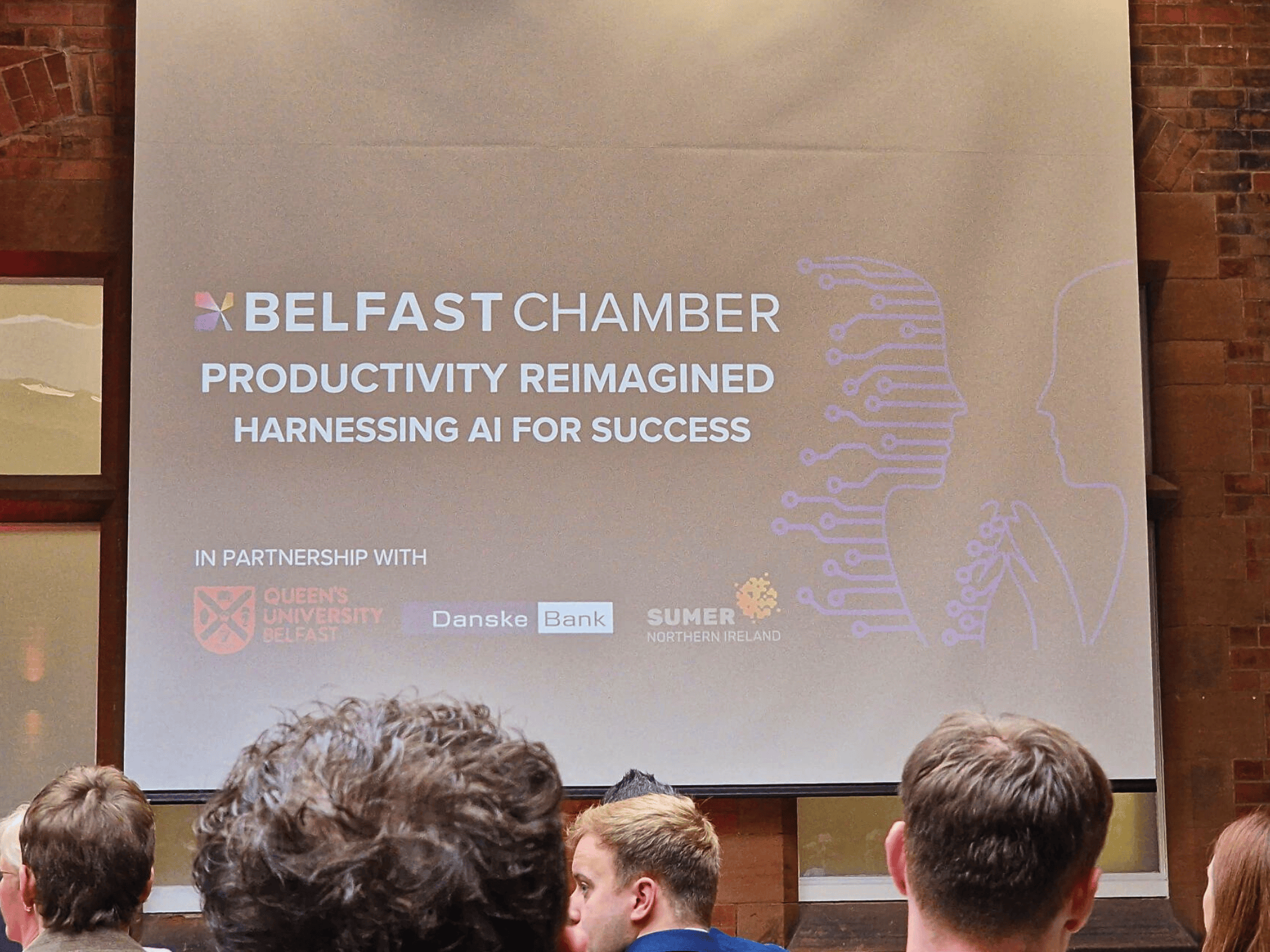
At Galvia Digital, most of our work lives inside real systems. Legacy software. IoT platforms. Custom builds. We kept seeing plenty of AI experimentation and very little structure, with no shared sense of what “normal” looks like across Northern Ireland. So we worked with Belfast Chamber, got input on question design from officials within the Department for the Economy, and asked businesses directly what they were actually doing. That became the Northern Ireland AI Survey 2025, covering 202 businesses across all 11 council areas.
We found AI use is already widespread across Northern Ireland, but it’s showing up in very practical, low-friction ways rather than big, headline-grabbing projects. 83% of businesses are using AI in some form, 79% use it weekly or daily, and 84% say it saves time or improves efficiency. In most cases, this isn’t about building models or re-engineering systems. It’s everyday tools like ChatGPT, Copilot, Canva or Grammarly helping teams get through routine work faster. Drafting emails, cleaning up documents, preparing marketing content, summarising information, or getting a first pass at ideas. For many organisations, AI has quietly become a digital assistant sitting alongside existing software. The impact on any single task might seem small, but when it’s used across teams and repeated daily, those time savings start to stack up.
The tension shows up when you look at structure. 73% of businesses have no formal AI policy. 62% don’t measure impact in any structured way. Over 60% rely on ad-hoc tools sitting outside core systems. AI is being used on real work, often involving sensitive data, without much thought about what happens when usage spreads or scales. We’ve seen this before with cloud, CRMs and automation. Adopt first. Figure it out later. That carries risk.
Download the 2025 Northern Ireland AI Survey
We defined AI use broadly on purpose. It includes everyday software features, tools like ChatGPT and Copilot, informal or “shadow” use by staff, and early pilots. Putting everyday tools and fully embedded systems side by side exposes the real gap between where businesses are starting and where people assume they already are. Smaller firms move fast but rely on tools. Larger firms integrate more deeply and worry about risk. Different stages, same problem. This matters because Northern Ireland still trails the UK average on productivity and capital investment, according to analysis from the Productivity Institute, PwC and Queen’s University Belfast, with output per hour around 11–15% lower and significantly less capital invested per job. At the same time, there are real bright spots. Strong exports. Growing R&D. Quiet innovation happening under the radar.

It’s clear that AI is already in use across Northern Ireland, but most businesses are still early in the journey, relying on tools rather than structure. Used strategically, AI could help close gaps in productivity seen in Northern Ireland by tightening processes, cutting waste and helping small teams get more done, but only if support meets businesses where they are now, not where we wish they were. The opportunity now is to turn experimentation into something more deliberate and sustainable. The Northern Ireland AI Survey 2025 goes deeper into sector differences, company size, skills gaps, policy maturity and the kinds of advanced or technical support businesses actually want. Download the full report to see the findings in detail and understand where your organisation sits. A genuine thank you to Belfast Chamber for backing this from the start, to the officials within the Department for the Economy who gave input on the question design, and to every business leader who took the time to take part.