
Cloud migration services

Cloud migration.
Move without the panic.

If ageing servers, hard-to-support desktop software or a growing maintenance burden are getting in the way, Galvia can help you plan and deliver a safer move into cloud-hosted infrastructure and applications.

Tell us what is running today, what is changing, and any date driving the move. You do not need a fully written migration plan first.

Built by a Belfast engineering team.Meet the people behind the work
CLOUD MIGRATION ROUTE EXPLOREREXAMPLE FLOW
Your current systemLive work and business rules already in use
The transition layer
Scope the changeHandle failuresDocument the route
Your improved operating stateA clearer route to the next stage
Illustrative example, not a live system. The right approach depends on your current setup, constraints and goals.
Phased migration planning
Application and data handover
Practical cloud delivery

Some of our clients

QUBISBelfast City CouncilSensata TechnologiesIntelQueen's University BelfastStimareSpirit AeroSystems

When to bring us in

Where is the current setup becoming a risk?

Perhaps remote access is awkward, infrastructure is ageing, or the application still depends on desktop assumptions. Tell us what is driving the need to move.

01 / INFRASTRUCTURE RISK

The hardware still works.
The dependency risk is growing.

A critical workload still depends on a server, desktop setup or hosting approach that is becoming harder to maintain. The danger is often operational first, not dramatic failure on day one.

02 / REMOTE WORK FRICTION

The work happens everywhere.
The system does not.

Teams need reliable access across sites, devices or field locations. The current application or data flow was not designed for that reality, and workarounds are building up.

03 / MOVE ANXIETY

Everyone agrees a move is needed.
No one wants the wrong move.

The risk is not just technical. Leaders worry about downtime, lost data, unclear costs and a migration that drags on without improving anything important.

How we start

Plan the move in phases
before changing the live system.

We start by clarifying the current setup, the useful destination and the order in which change should happen. That often means deciding what to rehost, what to improve and what should not be dragged forward at all.

Galvia team working in the Belfast office.
  1. 01

    Assess the current estate

    Establish the application, data, integrations, users and operational constraints involved. Capture the pieces that can interrupt a migration if they are missed.

  2. 02

    Agree the migration route

    Decide whether the safest first step is rehosting, replatforming, application change or a staged hybrid arrangement. Scope, responsibilities and cutover expectations are agreed before implementation starts.

  3. 03

    Migrate, test and hand over

    Plan backup, rollback, validation, user testing and the handover needed for the cloud-based environment to become the supported version.

An initial conversation is not a full cloud readiness audit. Detailed discovery, environment design and implementation are scoped separately.

Published project examples

Published examples of migration and cloud-adjacent delivery.

These projects show Galvia working with existing systems, operational data and real-world constraints rather than greenfield assumptions.

ASM / desktop to cloud

Move a freight workflow
beyond the desktop.

Galvia helped modernise a legacy desktop customs workflow into a browser-based environment, reducing dependence on older ways of working while keeping the operational logic intact.

Read the ASM case study

McFarland Consulting / cloud platform

Connected monitoring data,
made easier to use.

Galvia developed a shared platform for structural monitoring data, bringing information from field hardware into a usable environment for teams and decision makers.

Read the McFarland case study

Published work provides context rather than a promise of a one-size-fits-all migration route.

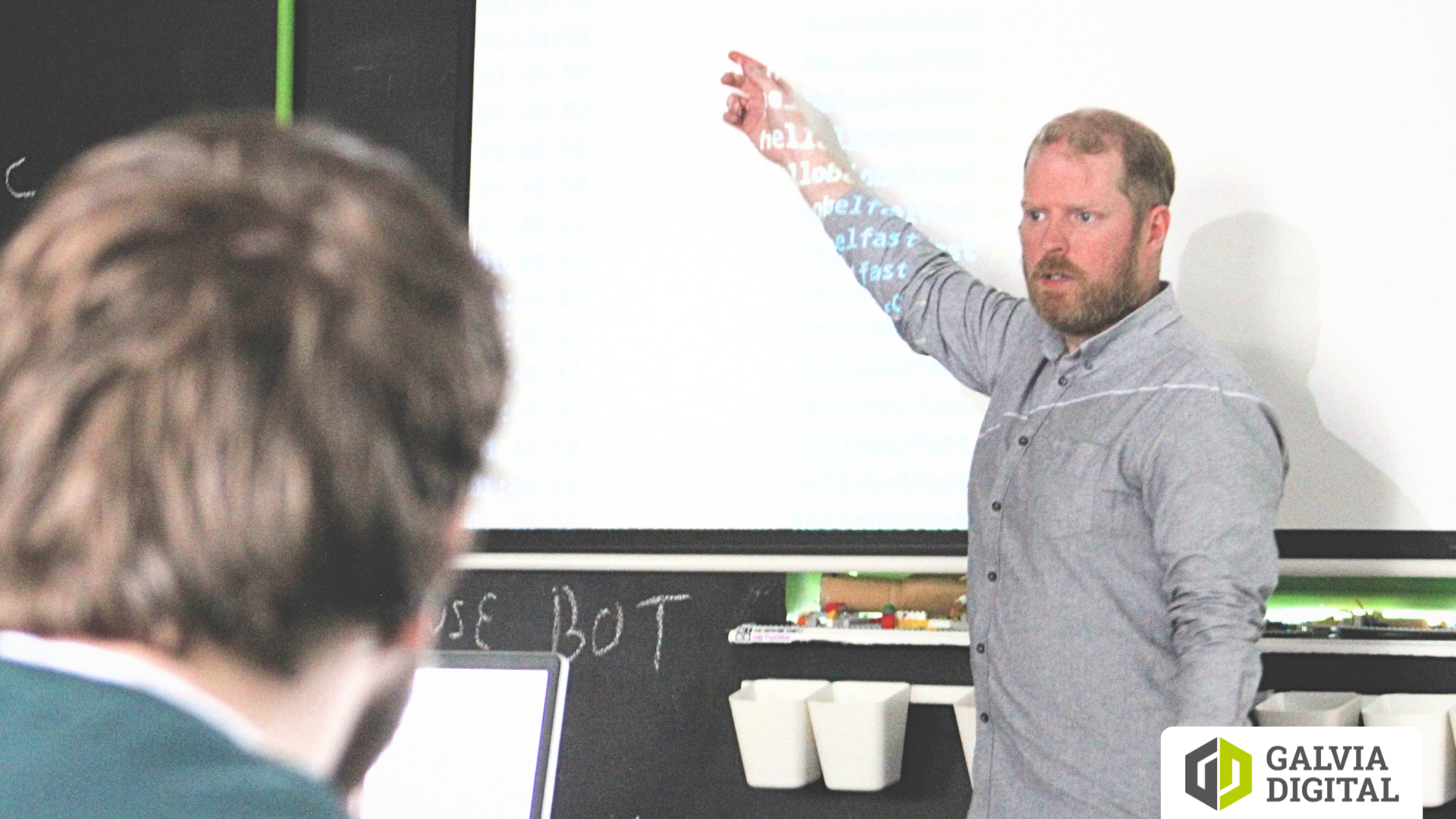
Martin Naughton speaking during a Galvia technical workshop.
Martin Naughton speakingGalvia technical workshop

The people behind the work

Work with engineers who
respect what already exists.

Cloud migration is often tied to software modernisation, data cleanup and operational change. Galvia works with existing business realities rather than pretending a full reset is always the answer.

We help you find a safer first move and make sure the handover is usable afterwards.

How Martin approaches a project

What the work can involve

Cloud migration services
for existing business systems.

Cloud migration is not one technical move. It can include infrastructure, application, data and process change. The right route depends on the age of the system, the operational needs around it and how much of the existing setup should be carried forward.

Migration discovery and planning

Review the current application, dependencies, data flows, user needs and operational constraints. Clarify what the business needs from the target state before choosing tools or platforms.

Application and data migration

Move or reshape the application and the data it depends on. That may include rehosting, a partial rebuild, a browser-based replacement, or a phased hybrid arrangement.

Cutover, rollback and handover

Define how the move is validated, what happens if something fails, who signs it off and how the business works during transition and after go-live.

Cloud modernisation around the move

Where old architecture or brittle processes are the real blocker, we can combine migration work with targeted modernisation rather than lifting old problems into a new place. Related work also sits within our software development and cloud, data & analytics services.

A cloud move should not be treated as a vanity project. Sometimes the right first step is not a full migration but a smaller modernisation, dependency reduction or interface layer. Our cloud migration planning brief helps you test that before committing to delivery.

FREE RESOURCE

Cloud Migration Planning Brief

Plan the move
before you touch production.

Use our six-page planning brief to record workloads, dependencies, migration risks, rollback needs and ownership. Take it into an internal discussion or a scoping call with Galvia.

Enter your details and go straight to the PDF. Marketing emails are optional.

Before you enquire

The practical
questions.

Is cloud migration the same as legacy modernisation?

Not always. Some migrations are mainly about infrastructure or hosting. Others expose deeper application constraints and become modernisation projects. We help clarify which problem you actually have.

Can you migrate an application without rewriting all of it?

Sometimes yes. A cloud move might involve rehosting or incremental change rather than a full rebuild. The safe route depends on the application, dependencies, interfaces and operational expectations.

What if we cannot afford long downtime?

That constraint should shape the design from the start. We discuss cutover windows, parallel running, phased rollout and rollback expectations early rather than treating them as later details.

Do we need to decide the target platform first?

Not necessarily. The useful first step is understanding the workload and business constraints. Platform choice follows from that, not the other way round.

Can you work alongside our internal team or IT supplier?

Yes. We can support a mixed delivery model provided responsibilities, access and decision ownership are clear.

What happens to our data and integrations?

Those dependencies are part of discovery and planning. A migration that ignores them is usually where risk hides.

How is pricing handled?

Pricing depends on the level of discovery, design and implementation involved. We agree scope, capacity and fees before delivery work starts.

Tell us what is prompting the move

What needs to move,
and what must keep working?

Tell us which system or workload is in scope, what is driving the change and any date you are working towards. We review each enquiry before arranging a call.

  • A person reviews the project before a call is arranged.
  • No credentials, backups or live personal data in the form.
  • No work or fees are agreed by submitting this form.

Commercial conversations are led by Martin Naughton, Galvia’s founder and solution architect. Meet Martin.

Prefer email? info@galviadigital.com

Galvia Digital · Practical engineering for real migration decisions.

Privacy · Explore our services