The information exists,
but it is spread across systems.
Teams spend time exporting, reconciling and joining data before they can answer a basic operational question.
Data analytics consulting services
When the data is scattered across systems, inconsistent or difficult to report on, the first job is to make it understandable. Galvia helps teams structure, connect and use operational data for reporting and better decisions.
Tell us the question you are trying to answer, where the data lives and what is unreliable today. You do not need to have chosen a reporting or analytics tool.
.png) Built by a Belfast engineering team.Meet the people behind the work
Built by a Belfast engineering team.Meet the people behind the work Some of our clients







When to bring us in
The information may already exist. The problem is often that it is spread across systems, defined differently or dependent on repeated manual work before anyone can use it.
Teams spend time exporting, reconciling and joining data before they can answer a basic operational question.
Duplicate records, inconsistent definitions and missing fields create arguments about the data instead of decisions from it.
When analysis starts with repeated cleanup every week or month, the process is fragile and difficult to scale.
How we start
Tell us the decision, report or workflow you are trying to improve. We map what is available, identify the constraints and agree the smallest useful piece of work before implementation starts.
Define the decision, report or workflow the data needs to support instead of beginning with a tool.
Map where the data comes from, what it means, who owns it and where quality or access limits the result.
Clean and connect what is needed, then deliver the reporting, model or pipeline with documentation and a clear handover.
An initial conversation is not a full technical audit. Repository access, detailed investigation and implementation are scoped separately.
Published project examples
These public projects show Galvia working with operational data and established systems. They demonstrate related engineering capability without implying the same architecture is right for every analytics project.
McFarland Consulting / connected data
Galvia connected monitoring devices, normalised their readings and delivered the information through a shared cloud platform. The published case describes reduced site visits and faster access to monitoring information.
Read the McFarland case studyFlax & Teal / existing data platform
Galvia built an offline-capable field application that works with an existing heritage-data platform, allowing teams to capture and synchronise structured information without replacing the backend.
Read the Extrados case studyRead the full stories for context. These are related public examples and do not imply an identical technical route for every project.
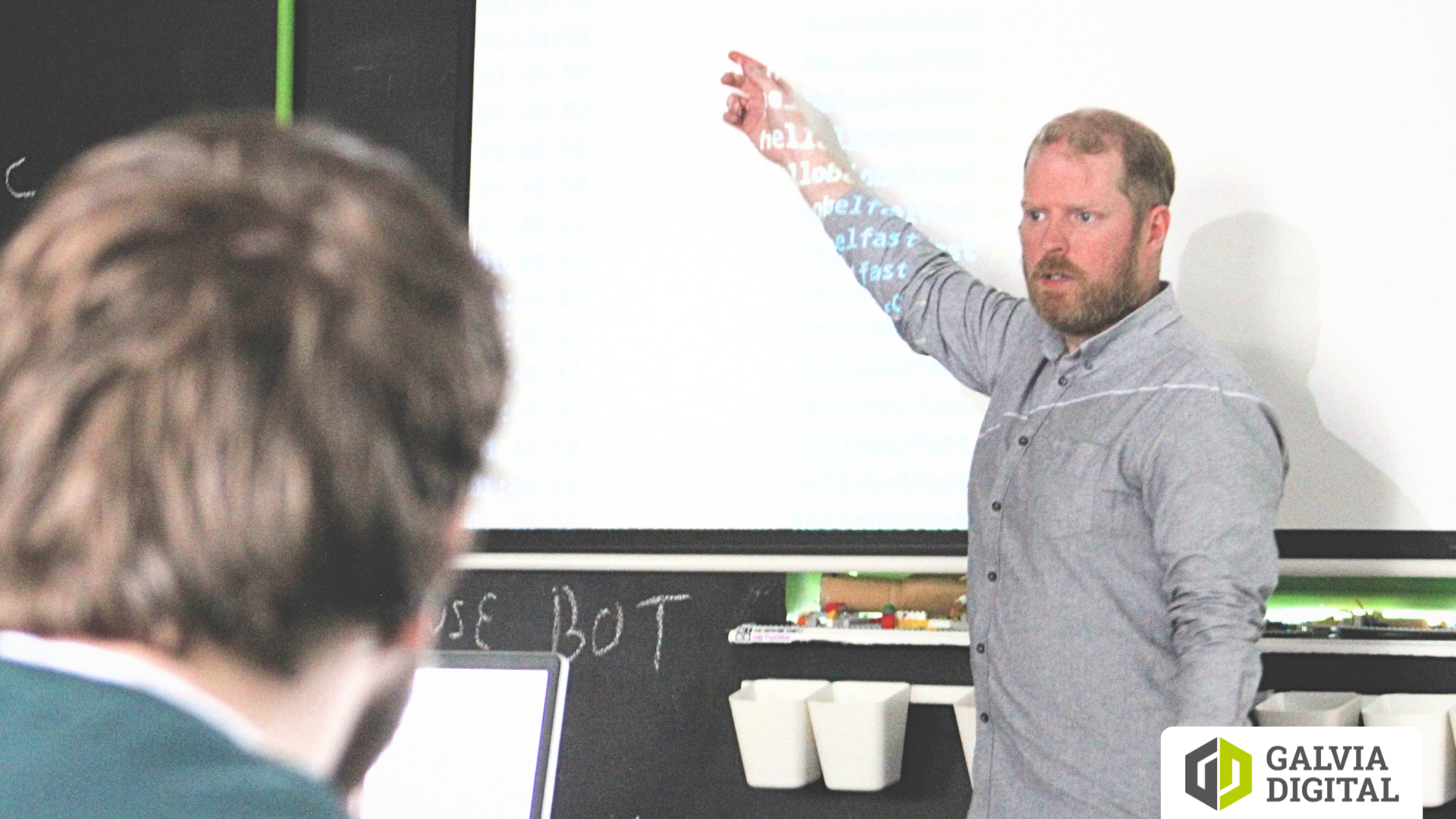
The people behind the work
Galvia is a Belfast software development team. We work alongside your people, explain the trade-offs and document what we build so the result can be understood and maintained.
You can get to know the team and how we approach a project before sharing your brief.
How Martin approaches a projectWhat the work can involve
The right engagement depends on the decision you are trying to improve. Sometimes the work is data cleanup. Sometimes it is integration, modelling, reporting or preparing a reliable foundation for later automation.
Identify the systems, owners, definitions and known quality problems behind a reporting or analytics need. We separate what can be fixed quickly from structural issues that need a broader change.
Connect the sources needed for a defined use case and make the movement of data repeatable. Where application interfaces are the main challenge, see our custom API integration work.
Turn reliable data into reporting that supports a real decision or workflow. If Power BI is the chosen reporting layer, our Power BI consultancy page explains that route.
Structure and document the data needed for later automation, forecasting or AI work. We focus on the useful foundation first rather than adding an AI layer to data nobody trusts.
Do not start with the dashboard or AI tool. Start with the decision, the source systems and whether the underlying information can be trusted. The technology choice becomes much easier after that.
FREE RESOURCE
Data Analytics Project Brief
Use the Data Analytics Project Brief to define the business question, source systems, data owners, known quality issues, reporting outputs and success criteria before an analytics engagement.
Enter your details and go straight to the PDF. Marketing emails are optional.
Before you enquire
Data analytics is the broader work of understanding, structuring, connecting and using data. Power BI is one reporting and visualisation platform. If the main problem is the source data or the way systems connect, it may need to be addressed before a Power BI build.
Yes, provided the sources and access can be understood. We map the systems, ownership and definitions first, then decide which data actually needs to be connected for the use case.
Not automatically. A warehouse can be useful, but it should solve a defined scale, governance or integration problem. Smaller projects may need a simpler data path. We recommend the architecture after understanding the use case.
Yes. The scope depends on the quality issues, volume, source systems and whether corrections can be made at source. We document assumptions and avoid hiding recurring quality problems inside a one-off cleanup.
Often, yes. Reliable structure, ownership and definitions are useful foundations for automation and AI. We still treat the future use case separately rather than promising that every cleaned dataset is ready for machine learning.
We start with the business question, intended users, source systems, known quality issues and the output required. That lets us determine whether the next step is investigation, integration, modelling, reporting or a combination.
Tell us what the data needs to support
Tell us the question you are trying to answer, where the data currently lives and what is unreliable or time-consuming today. We review each enquiry before arranging a call.
Commercial conversations are led by Martin Naughton, Galvia’s founder and solution architect. Meet Martin.
Prefer email? info@galviadigital.com
Galvia Digital · Practical engineering for existing businesses.