The software still matters, but the original team is moving on.
You need more than a repository transfer. Accounts, environments, deployment, data, support history and unresolved work all matter.
Legacy application support and software maintenance
When the original developer has left, the supplier is moving on or an ageing application still runs part of the business, Galvia can help take ownership, stabilise the software and create a workable support and modernisation path.
Tell us what the application does, why the support arrangement is changing and what currently feels risky. You do not need a finished specification.
.png) Built by a Belfast engineering team.Meet the people behind the work
Built by a Belfast engineering team.Meet the people behind the work Some of our clients

When to bring us in
A handover problem can quickly become an operational problem. The first job is to make ownership, access and the release path understandable before more change is added.
You need more than a repository transfer. Accounts, environments, deployment, data, support history and unresolved work all matter.
Limited tests, manual deployment and tightly coupled code can turn routine maintenance into an operational risk.
Support and modernisation are not the same decision. The immediate goal may be continuity while a phased improvement plan is developed.
How we start
We start with access, ownership and the current operating reality. Once the immediate support path is understood, we can agree the first piece of paid work and whether the longer-term answer is maintenance, targeted refactoring or wider modernisation.
Confirm the code, hosting, environments, accounts, deployment process, data and existing documentation.
Prioritise production risks, repeatable release steps, critical defects and documentation that reduces dependency on individuals.
Agree the ongoing engineering capacity and whether the next step is continued support, targeted refactoring or a wider modernisation programme.
What happens after the enquiry? The initial conversation is not a full technical audit. Repository access, detailed investigation and implementation are scoped separately.
Published project examples
These public Galvia projects show modernisation, developer handover and integration around existing products. They are related engineering evidence, not a claim that every inherited application needs the same route.
ASM / legacy modernisation
Galvia helped modernise an established freight-customs product and enabled the client team to continue development.
Read the ASM case studyStimare / product integration
Galvia created a shared mobile SDK, demo application and supporting documentation for barcode-scanner integration across Android and iOS.
Read the Stimare case studyRead the full stories for context. These are related public examples and do not imply an identical technical route for every project.
The people behind the work
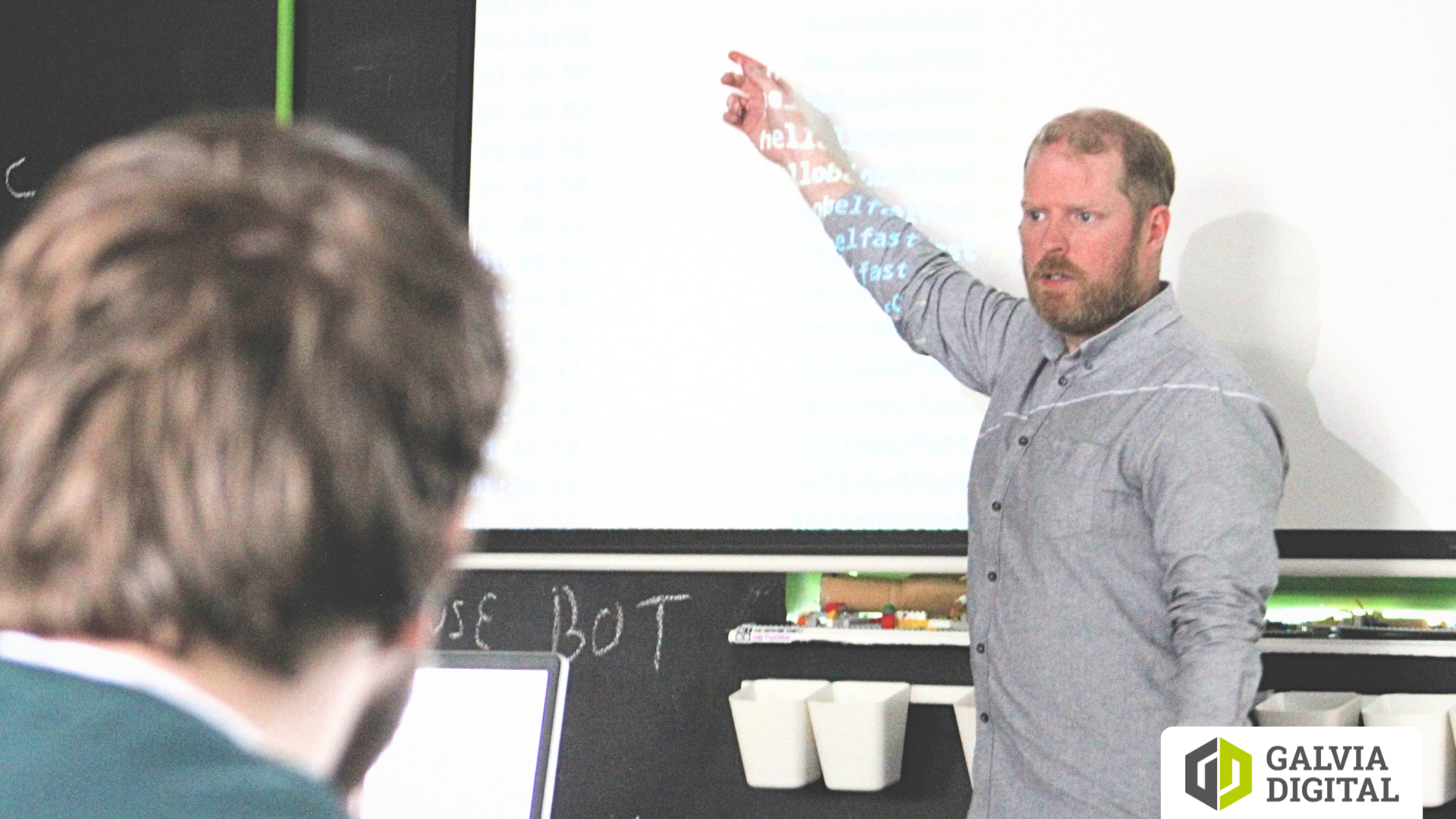
Galvia is a Belfast software development team. We work alongside your people, explain the trade-offs and document what we build so the result can be understood and maintained.
You can get to know the team and how we approach a project before sharing your brief.
How Martin approaches a projectWhat the work can involve
Ongoing support is part technical, part operational. The useful work is often a combination of recovering context, making releases safer and reducing dependency on one person or supplier.
Provide engineering capacity for defects, small changes and operational support around an existing application. We first establish what can be supported safely and what needs stabilisation before routine maintenance makes sense.
Take over software built by another developer or supplier where source code, environments and knowledge need to be brought under clearer ownership. The emphasis is a controlled transition rather than pretending a repository alone is a handover.
Reduce the risk around routine changes by improving repeatability, documentation, testing and deployment where the current setup allows it. The exact work depends on the codebase and infrastructure we inherit.
Keep the application running while identifying the parts that create the most cost or risk. Where larger change is justified, our legacy software modernisation work can turn that into a phased programme.
Keep the technical route proportional to the problem. Support does not automatically mean rebuilding the application. The first objective is to understand what must remain dependable now and what can be improved in a controlled sequence.
FREE RESOURCE
Software Takeover & Handover Checklist
Use the Software Takeover & Handover Checklist to record source code, hosting, environments, accounts, integrations, data ownership, release instructions, support history and unresolved work before a supplier or developer leaves.
Enter your details and go straight to the PDF. Marketing emails are optional.
Before you enquire
Yes, where the business has the necessary rights and access and the application can be understood and operated safely. We normally begin by establishing the source, environments, deployment path, documentation and immediate risks before agreeing ongoing support.
Useful handover material includes source repositories, hosting and environment details, deployment instructions, integration information, documentation, support history and outstanding issues. Do not send passwords, API keys or customer data through the enquiry form.
Often, yes. If the existing application can be supported safely, maintenance and incremental improvement may be the right answer. A rebuild is a separate decision and should be justified by the constraints of the current system and the business need.
The first step is to establish what access and ownership the business currently has and what must be transferred. That may require cooperation from the existing supplier. We can help identify the technical gaps, but legal ownership questions should be resolved with the appropriate advisers.
Support is about continuity and safe ongoing change. Modernisation addresses deeper structural constraints. A business can stabilise support first and then move into targeted refactoring, migration or replacement when there is a clear reason to do so.
Yes. Galvia can provide engineering capacity alongside an internal team, with the level of involvement agreed around the backlog, ownership and technical context.
Tell us what the application still needs to do
Tell us which application is involved, why the support arrangement is changing and what feels most urgent. We review each enquiry before arranging a call.
Commercial conversations are led by Martin Naughton, Galvia’s founder and solution architect. Meet Martin.
Prefer email? info@galviadigital.com
Galvia Digital · Practical engineering for existing businesses.