The software still matters.
Every change feels expensive.
The system still runs the business, but updates take too long, edge cases stack up and nobody is confident about touching the wrong part.
Legacy software modernisation services
When an older business system is slowing delivery, increasing support risk or limiting what your team can do next, Galvia helps clarify the safest route to modernise without pretending everything needs thrown away.
Tell us what the system does today, what is painful about it, and what the business wants to change. You do not need a full rewrite brief.
.png) Built by a Belfast engineering team.Meet the people behind the work
Built by a Belfast engineering team.Meet the people behind the work
Some of our clients


When to bring us in
Maybe the application is stable but restrictive, support is fragile, or every change feels harder than it should. Tell us what the current system is costing you in practice.
The system still runs the business, but updates take too long, edge cases stack up and nobody is confident about touching the wrong part.
The software may have been designed for office desktops, earlier workflows or older teams. Staff work around it because the experience no longer fits how the job happens today.
Leaders want to reduce risk without creating a bigger one. The hard part is deciding what to retain, what to isolate and what genuinely needs replaced.
How we start
Modernisation can mean interface layers, application restructuring, browser-based replacements, mobile extensions, phased retirement, or a fuller rebuild. We help separate those options so the business is not forced into a false either/or choice.
Review the workflows, architecture, dependencies, support reality and operational constraints around the software as it exists today.
Clarify whether the right next step is refactoring, replatforming, application replacement, an integration layer, or a phased hybrid approach. Scope, owners and commercial terms are agreed before delivery starts.
Build, test and hand over a useful piece of change that reduces risk or unlocks the next phase, rather than treating modernisation as an all-or-nothing event.
An initial conversation is not a full legacy application audit. Detailed technical review and implementation are scoped separately.
Published project examples
These projects show Galvia working with established software, data and operational realities rather than starting with a blank sheet.
ASM / desktop to browser
Galvia helped reshape a desktop-based freight customs workflow into a browser-based environment better suited to modern working practices.
Read the ASM case studyExtrados / legacy platform extension
Galvia built a lightweight mobile app that worked with an existing heritage data platform and database, avoiding a risky replacement while improving real-world use.
Read the Extrados case studyPublished case studies show the kind of thinking involved. They are not drop-in blueprints for every legacy system.
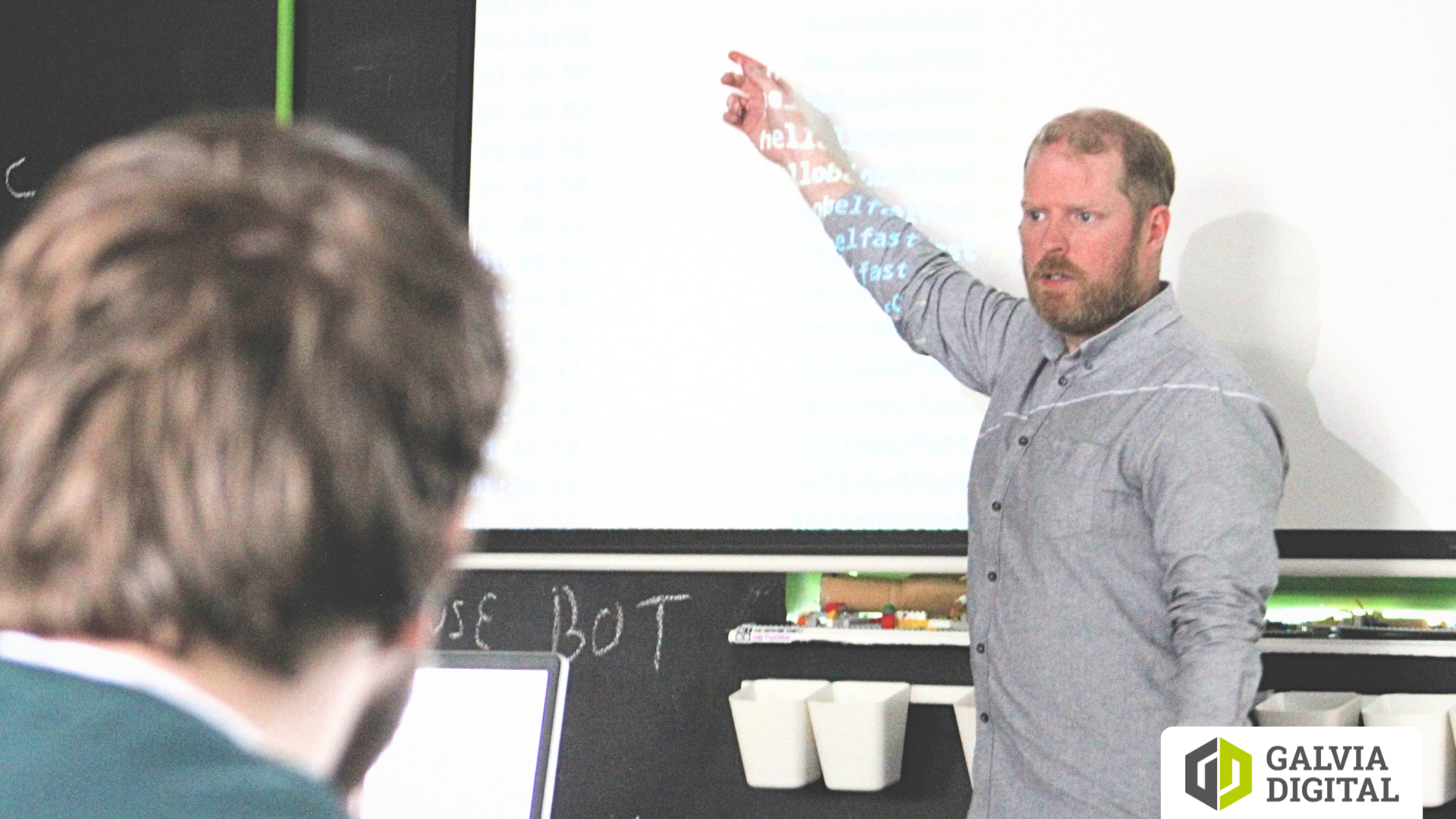
The people behind the work
Legacy software carries business logic, workarounds and operational knowledge. Galvia helps you modernise with that in mind, not by assuming a blank-slate rebuild is the only serious answer.
We focus on the first useful improvement, clear communication and a handover your team can live with.
How Martin approaches a projectWhat the work can involve
Modernisation is not just code cleanup. It can involve user experience, architecture, integrations, data, hosting, and the working practices around the software. The right route depends on the problem the business actually needs solved.
Review the current application, workflows, architecture and delivery constraints to understand what should be retained, isolated, replaced or retired.
Reduce risk by delivering meaningful change in stages. That might mean a browser front end, new integration layer, mobile extension, partial rewrite or targeted module replacement.
Modernisation often intersects with integrations and cloud moves. We consider those dependencies early so the programme does not create surprises later. Related work may also sit within our custom API integration and cloud migration services.
Agree how the improved system is tested, documented, supported and owned once the first phase is complete.
Modernisation does not have to mean “rip and replace”. A lighter-weight route can sometimes remove friction and reduce risk without forcing a full rebuild first. Our legacy modernisation planning brief helps you test those options.
FREE RESOURCE
Legacy Modernisation Planning Brief
Use our six-page planning brief to record the system, constraints, change drivers, risks and candidate routes. It is a practical starting point for internal discussion or a scoping call with Galvia.
Enter your details and go straight to the PDF. Marketing emails are optional.
Before you enquire
No. A full rebuild is only one option. In many cases a staged, lower-risk route is more sensible.
We look at the workflows, business rules, operational dependencies and technical constraints that still create value, then compare routes for improving the weak points.
Yes. Those pieces often overlap. We make the dependencies explicit so the plan reflects reality rather than treating each topic in isolation.
That is common. It affects risk and scoping, but it does not make change impossible. It does mean the first step may need more investigation.
Yes. A bounded first phase is often the right commercial and operational move.
The answer depends on the route chosen. We discuss continuity, rollout and rollback expectations early.
Pricing depends on the level of discovery, design and implementation involved. Scope, capacity and fees are agreed before delivery starts.
Tell us where the current software is getting in the way
Tell us what the software supports today, what is painful about it and any commercial or operational driver behind the need to change. We review each enquiry before arranging a call.
Commercial conversations are led by Martin Naughton, Galvia’s founder and solution architect. Meet Martin.
Prefer email? info@galviadigital.com
Galvia Digital · Practical engineering for software that still has a job to do.