The project is moving,
but the finish line keeps moving.
Requirements, technical debt, dependencies or supplier capacity may be blocking progress. The first job is to separate symptoms from the actual constraint.
Software project rescue
If a software project is late, unstable, abandoned or changing hands, you need clarity before another rebuild or supplier change. Galvia can review the available evidence, stabilise the immediate risk and help define a workable recovery route.
Tell us what has gone wrong, whether the software is live and what deadline or handover is creating pressure. You do not need to diagnose the technical cause first.
.png) Built by a Belfast engineering team.Meet the people behind the work
Built by a Belfast engineering team.Meet the people behind the work Some of our clients



When to bring us in
A late project, unstable release process or failed handover usually has more than one cause. The first job is to secure the facts and identify what is threatening delivery or production now.
Requirements, technical debt, dependencies or supplier capacity may be blocking progress. The first job is to separate symptoms from the actual constraint.
Fragile deployments, missing tests and unclear ownership make changes risky. Stabilisation may need to happen before new features continue.
Source code is only part of the handover. Hosting, accounts, deployment, documentation, data and unresolved commitments all need to be understood.
How we start
Tell us what has happened, what is live and who still has access or context. We review the available evidence and agree whether the next step is triage, stabilisation, takeover or a more detailed technical audit.
Confirm repositories, hosting, environments, credentials ownership, documentation and the people who still understand the system.
Review the evidence needed to identify what threatens delivery or production. Detailed code investigation is scoped if required.
Prioritise stabilisation, delivery and handover work. Decide what Galvia owns, what the existing team owns and what can wait.
An initial conversation is not a full technical audit. Repository access, detailed investigation and implementation are scoped separately.
Published project examples
These public projects show Galvia working with established software and existing technical constraints. They are relevant delivery proof, not a promise that every rescue follows the same route.
ASM / legacy to browser
Galvia helped modernise a desktop freight-customs product into a browser-based, cloud-ready application, with automated updates and a reusable component approach that enabled the client team to continue development.
Read the ASM case studyFlax & Teal / existing platform
Galvia built an offline-capable field application on top of an existing heritage-data platform without requiring the backend to be replaced.
Read the Extrados case studyRead the full stories for context. These are related public examples and do not imply an identical technical route for every project.
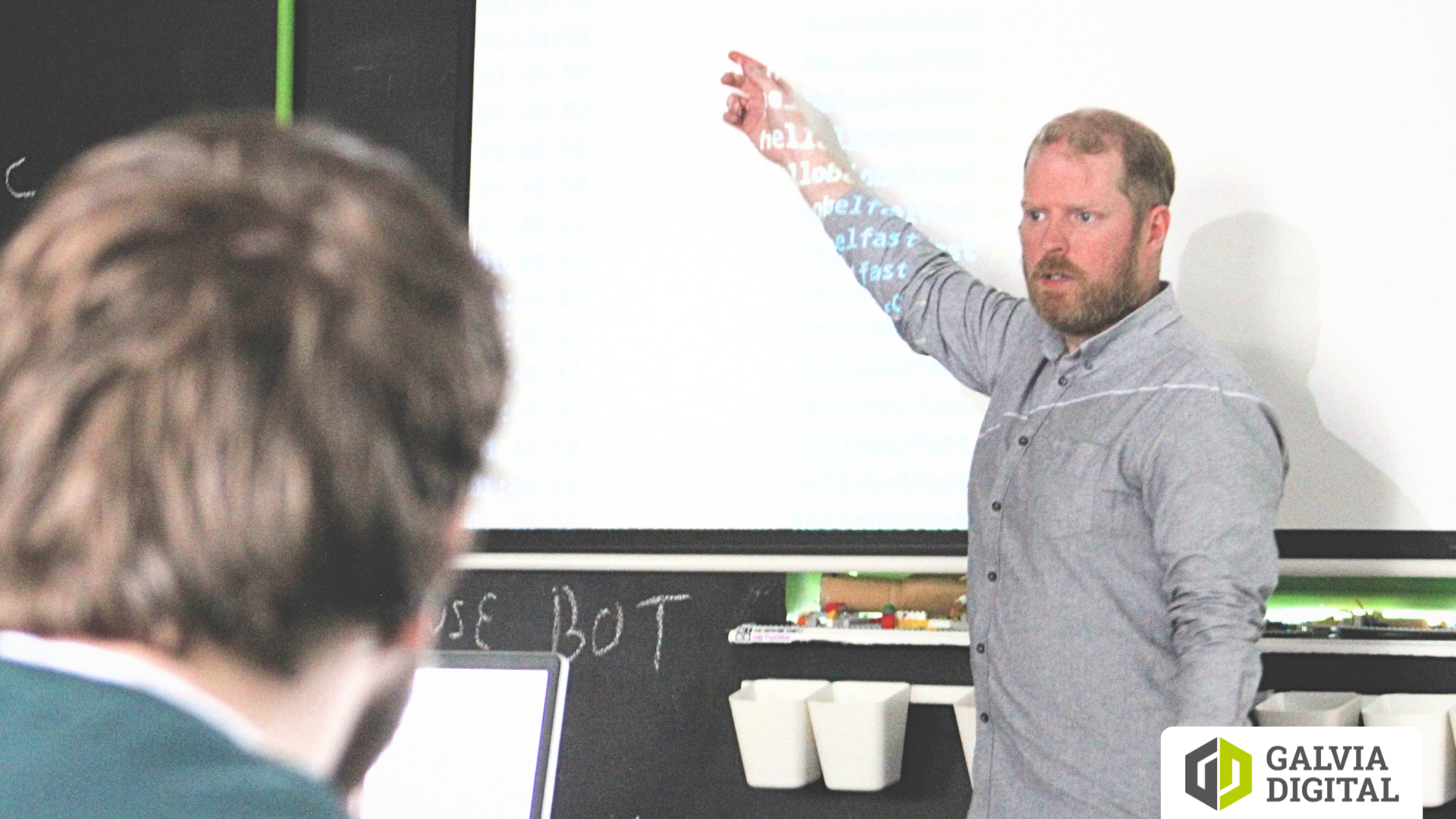
The people behind the work
Galvia is a Belfast software development team. We work alongside your people, explain the trade-offs and document what we build so the result can be understood and maintained.
You can get to know the team and how we approach a project before sharing your brief.
How Martin approaches a projectWhat the work can involve
The goal is not to arrive and rewrite everything. The first useful outcome is clarity about the technical state, access, ownership and the work that most directly reduces delivery or operational risk.
Review the available repository, environments, issue history, deployment process and project evidence to understand what is actually blocking delivery. Detailed investigation is scoped where the problem cannot be established from the initial evidence.
Take over an existing application where the original developer or supplier is leaving. We clarify code, hosting, accounts, data, documentation and responsibilities before accepting ongoing delivery work.
Reduce the immediate risk around builds, environments and releases before continuing feature work. The exact work may involve testing, deployment processes, rollback, environment consistency or ownership.
Turn the triage into a prioritised recovery backlog and agree where Galvia should provide engineering capacity. If the system needs a longer-term architectural change, our legacy software modernisation work may become the next stage.
Rescue does not automatically mean rebuild. A good recovery plan should make clear what can be retained, what needs stabilising now and what should only change after the immediate delivery risk is under control.
FREE RESOURCE
Software Project Rescue Triage Brief
Use the Software Project Rescue Triage Brief to record repositories, hosting, environments, accounts, data, current defects, delivery commitments and the questions a new engineering team needs answered.
Enter your details and go straight to the PDF. Marketing emails are optional.
Before you enquire
Yes, subject to access, ownership and an initial review of the available system and project evidence. We do not assume an inherited codebase is bad or promise a takeover before understanding the operational and technical risks.
That is common in a rescue situation. We use the repositories, environments, issue history, people involved and running system to reconstruct what matters. Missing documentation increases uncertainty, so discovery effort is scoped rather than treated as free pre-sales work.
No. The first conversation can establish whether there is a fit and what access exists. Meaningful technical triage normally needs appropriate access to the code, environments, deployment information and relevant documentation.
Yes. In many cases the safest handover is collaborative. We clarify responsibilities, access and the transition plan so knowledge can move without creating unnecessary disruption.
When the existing software still contains useful business logic, data, workflows or deployed value that can be stabilised or improved. A rebuild may still be appropriate, but that decision should follow evidence rather than frustration with the current project.
The next stage may be stabilisation, a defined delivery backlog, embedded engineering support, modernisation or a controlled replacement. We agree the route, capacity and commercial terms after the critical risks are understood.
Tell us what has gone wrong
Tell us whether the system is live, what has happened with the current project or supplier and any operational or customer deadline. We review each enquiry before arranging a call.
Commercial conversations are led by Martin Naughton, Galvia’s founder and solution architect. Meet Martin.
Prefer email? info@galviadigital.com
Galvia Digital · Practical engineering for existing businesses.